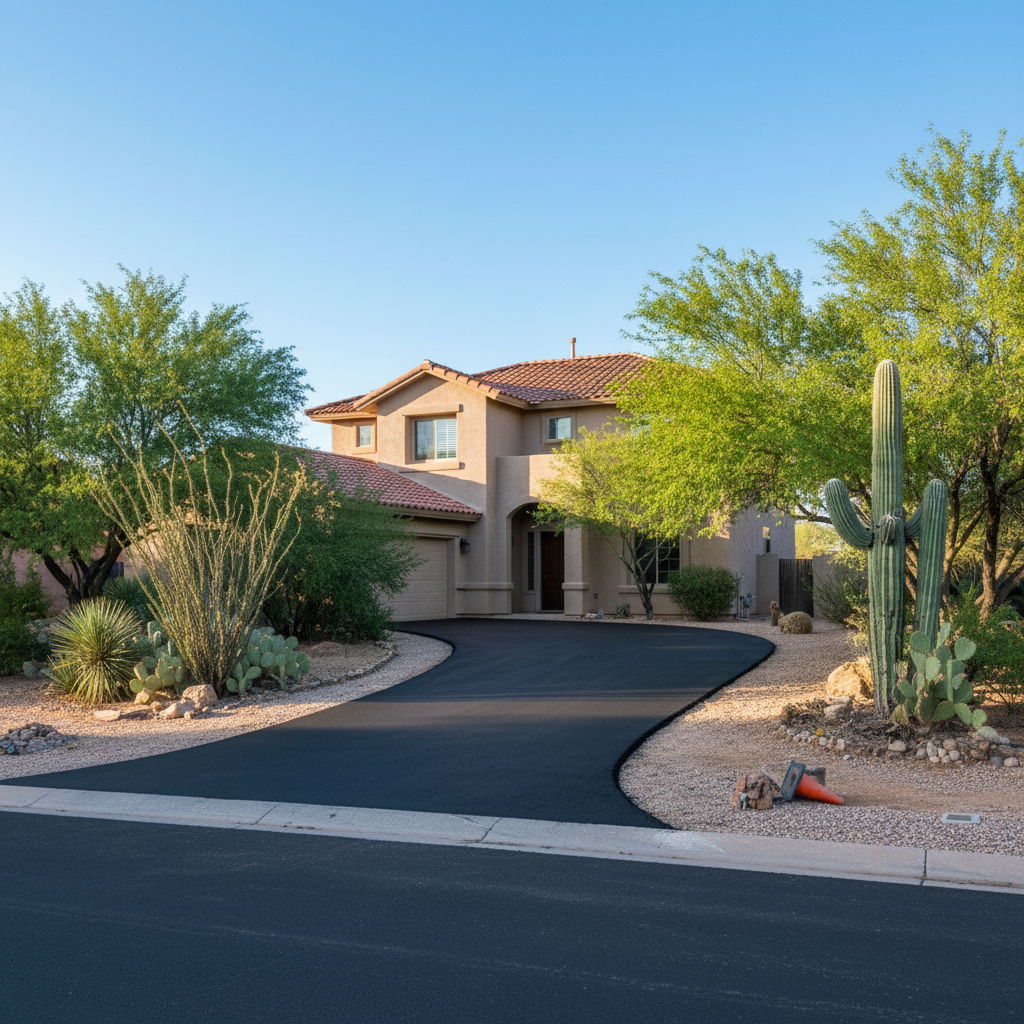
When's the best time to pave your driveway here in Tucson? It's a question I get asked a lot, and for good reason. Our desert climate isn't like other places, and what works up north definitely won't work as well here. Getting the timing right can make a huge difference in how long your asphalt lasts and how well it cures.
Why Tucson's Weather Matters for Asphalt
You know how hot our summers get. We're talking 100+ degrees for weeks on end, sometimes even hitting 115 degrees. That kind of heat, combined with the intense UV rays, is brutal on everything, especially new asphalt. Then you've got the monsoon season, which brings heavy, sudden downpours. Both extremes can cause problems if you're not careful.
When we lay down asphalt, it's a hot mix. It needs to cool and compact properly. If it's too hot outside, the asphalt can stay pliable for too long, making it harder to compact correctly. It also increases the risk of rutting or displacement before it's fully cured. On the flip side, if it's too cold, the asphalt cools too quickly, which can lead to poor compaction and a weaker surface. We're looking for that sweet spot where the ambient temperature helps the material cure at a steady, optimal rate.
The Best Time to Schedule Your Paving Project
From what I've seen over the years, the prime seasons for asphalt paving in Tucson are late fall, winter, and early spring. Think October through April, generally. During these months, our daytime temperatures are usually in that ideal range – not too hot, not too cold. You get consistent, moderate weather that allows the asphalt to be laid, compacted, and cured just right.
- Fall (October - November): The summer heat is finally breaking, and we get those beautiful, warm days without the scorching sun. It's perfect for paving.
- Winter (December - February): Our winters are mild. We might get a few chilly mornings, but most days are sunny and comfortable, usually in the 60s and 70s. This is an excellent window for work.
- Early Spring (March - April): Before the real heat kicks in, early spring offers another great opportunity. You'll want to get it done before May, when those temperatures start climbing fast.
What about summer? I generally advise against major paving projects in June, July, and August if you can avoid it. The extreme heat can make it tough to get a quality, long-lasting finish. Plus, those monsoon storms can pop up out of nowhere, dumping a ton of water on a fresh, uncured surface, which is definitely not ideal. It's not impossible, but it adds a layer of risk and complexity that's usually best avoided for your investment.
Weather Conditions to Watch Out For
Even within those good seasons, there are specific conditions we pay attention to:
- Rain: This is a big one. You can't lay asphalt on a wet surface. Period. The bond won't form correctly, and you'll have problems down the road. If rain is in the forecast, we'll reschedule. It's better to wait a day or two than rush it and compromise the quality.
- Extreme Cold: While rare in Tucson, if we get a cold snap where temperatures dip below 40 degrees Fahrenheit during the day, it's not ideal. The asphalt cools too fast, making it hard to achieve proper compaction.
- High Winds: Strong winds can cool the asphalt too quickly and also blow debris onto the fresh surface. It's not usually a deal-breaker, but it's something we monitor.
Protecting Your Investment Year-Round
Once your driveway is paved, you've got to protect it. Here's what I tell all my clients:
- Sealcoating: This is your asphalt's best friend, especially here in Tucson. Our intense sun and UV rays are the number one enemy of asphalt, causing it to oxidize and become brittle. Sealcoating every 2-3 years (depending on traffic and sun exposure) acts like sunscreen for your driveway. It replenishes the binders in the asphalt, protects against UV damage, and helps repel water. It's a small investment that pays off big time in extending the life of your driveway.
- Regular Cleaning: Sweep off dirt, leaves, and debris. Don't let oil or gas spills sit there; clean them up quickly. These can break down the asphalt binders.
- Crack Sealing: As soon as you see a crack, get it filled. Cracks are like open invitations for water to get underneath your asphalt, especially during the monsoon. Once water gets under there, it can erode the base, leading to bigger problems like potholes. Catching them early is key.
- Avoid Heavy Loads: Try not to park heavy RVs or construction equipment on your driveway for extended periods, especially during hot weather. The weight combined with the heat can cause depressions or ruts.
At Pacific Asphalt Company, we've been doing this for a long time in Tucson. We know our local conditions inside and out, from the caliche soil that can affect your base to the specific challenges of our summer heat. We'll always advise you on the best time to get your project done to ensure you get a durable, beautiful driveway that stands up to our unique desert environment.