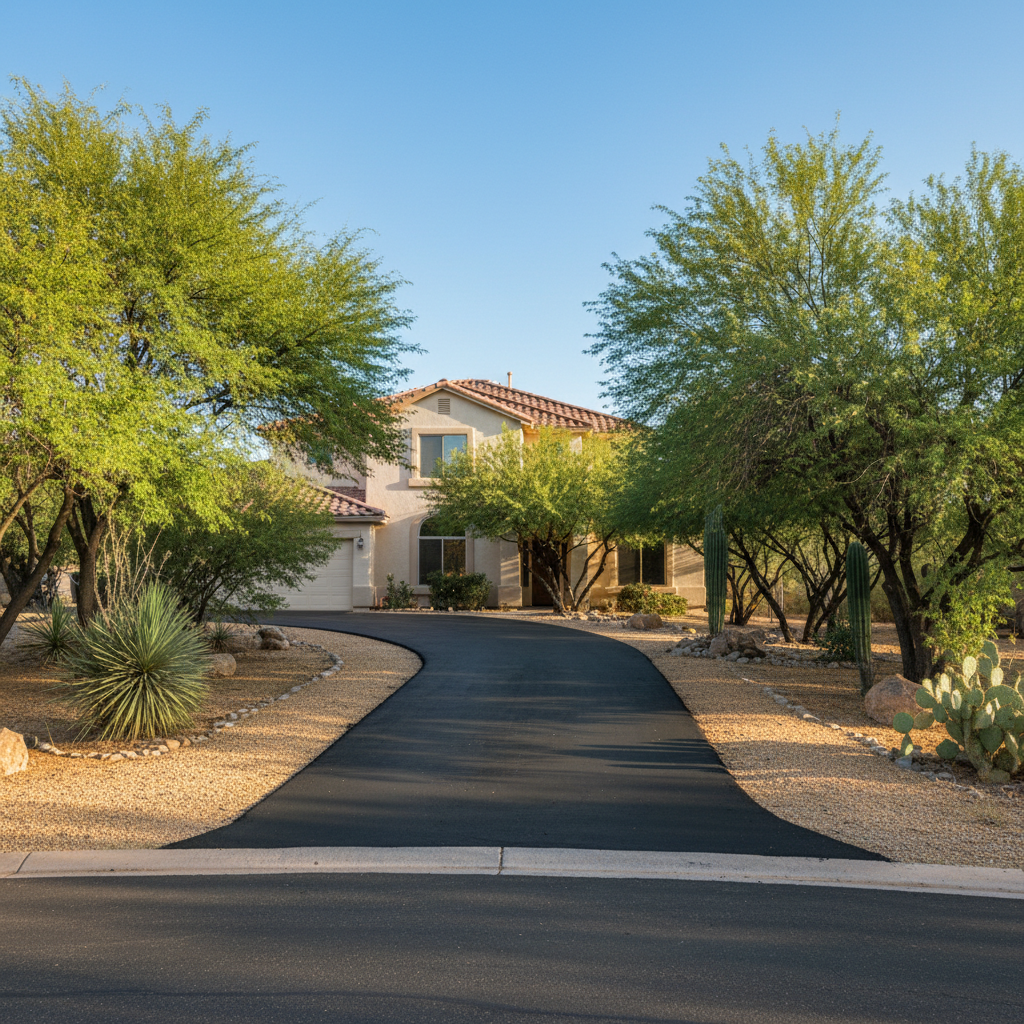
You have cracks, and you have potholes. This is a common thing for Asphalt in Tucson, AZ. Knowing when to fix these repairs, and how to make them last, will save you money and problems later on. Pacific Asphalt Company has seen how the Tucson desert climate affects Asphalt, and Asphalt Patching is no different.
When to Schedule Your Asphalt Patching in Tucson, AZ
Pacific Asphalt Company recommends you schedule your Asphalt Patching when the weather is good. For Hot Mix Asphalt, which Pacific Asphalt Company uses for strong and lasting repairs, the best time is when air and pavement temperatures are always above 50°F and getting warmer. This means spring and fall are often the best times for Asphalt Patching in Tucson, AZ.
Why is this the best time? Hot Mix Asphalt needs to be laid hot. It needs to be around 275-290 degrees Fahrenheit. This helps it mold, compact, and bond correctly. If the Hot Mix Asphalt cools too fast, the patch will be weak and will not last. In the colder months in Tucson, AZ, it takes longer for the ground and air to get warm enough. In the summer, it can be too hot. Pacific Asphalt Company will explain more about this.
Weather Conditions That Affect Asphalt Patching Work in Tucson, AZ
The weather in Tucson, AZ, is very strong. It plays a big part in how well an Asphalt Patch will stick and how long it will last. This is about more than just a sunny day for Pacific Asphalt Company.
Temperature Extremes in Tucson, AZ
- Heat: The summers in Tucson, AZ, are very hot. Surface temperatures on black Asphalt can easily reach 150°F or more. Hot Mix Asphalt needs heat to be workable. However, very hot temperatures can make the Asphalt too soft. This makes proper Compaction hard to do. It also makes the Asphalt oxidize faster, which makes the binder brittle and causes more cracks.
- Cold: Cold weather is not as common in Tucson, AZ, but it does happen. Asphalt becomes brittle when it is cold. This can make it harder for the Sealant to stick well. Pacific Asphalt Company prefers pavement temperatures to be above 60°F for Sealcoating and Asphalt Patching. This makes sure the bonding and curing are correct.
Moisture and Monsoons in Tucson, AZ
Water is the biggest enemy of Asphalt, even in the dry climate of Tucson, AZ. When water gets into cracks, it makes the Sub-Base weak. The Sub-Base is the foundation of your Pavement. This causes bigger cracks and potholes.
The monsoon season in Tucson, AZ, is a good example of this. Sudden, heavy rain can make every small crack worse. If moisture gets trapped and then there is a cold night, the expansion and contraction cycle makes things much worse. Even light rain or high humidity can make Crack Sealing not work as well. This is because it stops proper Compaction and makes the Sealant weaker. That is why Pacific Asphalt Company does not do major Asphalt Patching during the monsoon season unless it is an emergency. Dry conditions are needed for the material to bond correctly.
Humidity in Tucson, AZ
You might not think much about humidity in Tucson, AZ, but it is important. High humidity can make the curing process of Asphalt Patches and Sealants slower. This can delay when you can use the patched area. More importantly, it can affect how long the patch lasts by making the Asphalt's adhesive properties weaker.
Protecting Your Asphalt Investment Year-Round in Tucson, AZ
Once Pacific Asphalt Company has installed those Asphalt Patches, you want them to last. Here is how to protect your Asphalt in Tucson, AZ:
- Address new cracks quickly: Small cracks let water in, and water is the enemy of Asphalt. Filling them quickly is much cheaper than fixing a Pothole later. Pacific Asphalt Company uses Hot Rubberized Sealants that flex with the temperature changes in Tucson, AZ.
- Keep it clean: Sweep off sand, gravel, and debris. These things can hold moisture or act like sandpaper under tires. This wears down your Asphalt.
- Watch your drainage: Make sure water drains off your Pavement, especially after monsoon storms in Tucson, AZ. Standing water is a big problem. If you have low spots where water pools, that is a red flag.
- Consider Sealcoating: A regular Sealcoat schedule helps protect against UV damage and oxidation. This is very important with the strong sun in Tucson, AZ. It keeps the Asphalt binder flexible and makes your Pavement last years longer. The team at Pacific Asphalt Company can help you find the right schedule for your property in Tucson, AZ.
- Deal with oil spills: Oil and other vehicle fluids can soften and weaken Asphalt. Clean them up fast.
- Check for tree roots: In the dry region of Tucson, AZ, tree roots are always looking for water. They can push up under Asphalt, causing cracks and heaving. Address root intrusion early to stop bigger problems.
By understanding how the Tucson, AZ, climate affects your Asphalt and taking these steps, you will keep your patched areas, and your entire Paved Surface, in much better shape for a lot longer. It is all about good timing and consistent care for your Asphalt.