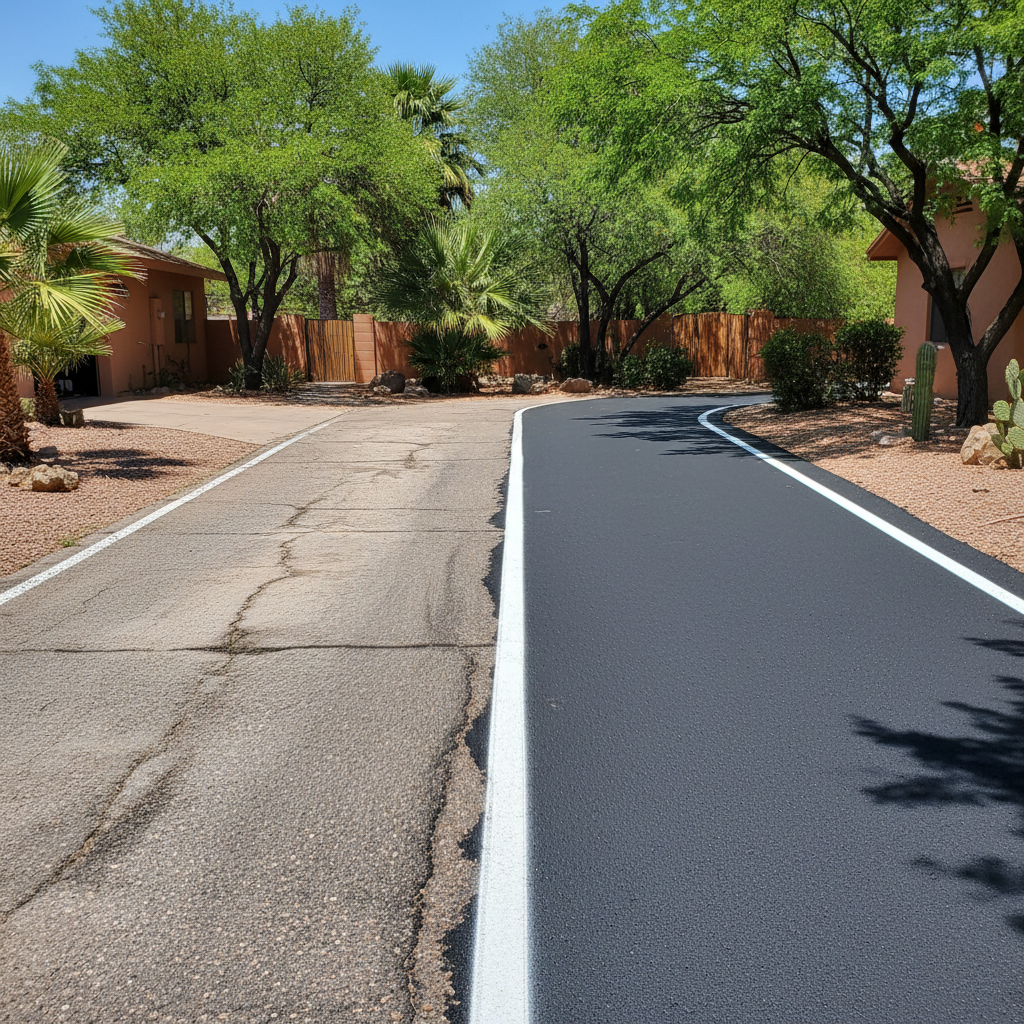
Alright, let's talk about striping. You've got a fresh asphalt driveway or parking area, or maybe your old lines are just faded and sad. You want those crisp, clear lines that tell people where to park, where to drive, and just make the whole place look sharp. But what's the best way to get 'em? For most homeowners here in Tucson, it usually boils down to two main options: regular traffic paint or thermoplastic markings. I've seen both used a lot, and frankly, there's a big difference.
Traffic Paint: The Budget-Friendly Option
When you hear 'asphalt striping,' you're probably thinking of traffic paint. It's what most folks are familiar with, and for good reason: it's generally the most affordable upfront. We're talking about a specialized, durable paint designed to withstand vehicle traffic and weather. It comes in various formulations, but the basic idea is the same – you spray it on, it dries, and boom, you've got your lines.
Cost: This is where paint shines, at first anyway. It costs less per linear foot to apply than thermoplastic. If you're on a tight budget and just need something to get by for a few years, paint is your guy.
Durability: This is also where paint starts to fall short, especially in our Arizona sun. That intense UV radiation we get all year round, combined with the heat, really takes a toll. Paint fades, cracks, and wears away much faster than thermoplastic. You'll typically see paint lines needing re-striping every 1-3 years, depending on traffic volume and how well the surface was prepped.
Maintenance: Not much to do here besides re-striping when it fades. You can't really 'fix' a faded paint line; you just paint over it again.
Appearance: When it's fresh, it looks great. Bright, crisp lines. But as it ages, it can look pretty beat up quickly, especially in high-traffic areas or spots where the sun just bakes it all day, like a south-facing parking spot in a typical Catalina Foothills home.
Thermoplastic Markings: The Long-Term Investment
Now, thermoplastic is a different beast entirely. It's not paint; it's a plastic material that's heated until it's molten, then applied to the asphalt. As it cools, it hardens into a durable, reflective layer. Think of it like a thin, tough plastic coating rather than just a layer of paint.
Cost: Upfront, thermoplastic is more expensive. There's no getting around that. The material itself costs more, and the application process is more involved, requiring specialized equipment and skilled crews. However, don't just look at the initial price tag.
Durability: This is where thermoplastic truly excels. It's incredibly tough. It resists fading from UV, it doesn't crack as easily, and it stands up to traffic significantly better than paint. I've seen thermoplastic lines last 5-8 years, sometimes even longer, even under heavy use. For a homeowner, that means less hassle and fewer re-striping jobs over time.
Maintenance: Very low. Because it lasts so long, you won't even think about maintenance for years. When it finally does start to show wear, it often just needs a touch-up or a new application in heavily worn spots, rather than a full re-striping.
Appearance: Thermoplastic lines are typically thicker and have a slightly raised profile, which can make them more visible, especially at night due to their reflective properties. They maintain their color and crispness for a much longer period, keeping your property looking sharp year after year.
My Recommendation for Tucson Homeowners
Look, I'm not going to beat around the bush. If you're a homeowner in Tucson and you want the best value and the least headaches over the long haul, go with thermoplastic. Yes, it costs more upfront, but when you factor in how often you'd have to re-stripe with paint in our harsh climate, thermoplastic almost always comes out ahead in total cost of ownership.
Think about it: if paint lasts 2 years and thermoplastic lasts 6, you're paying for paint three times. Even if thermoplastic is double the price initially, you're still saving money and a lot of effort in the long run. Plus, your property looks better, longer. That's a win-win in my book.
For residential properties, whether it's a private drive, a small HOA parking lot, or even just marking out a basketball court on your asphalt, thermoplastic just makes more sense here. The sun and heat are brutal, and you want something that can stand up to it. Pacific Asphalt Company has done plenty of both, and I can tell you firsthand which one makes customers happier down the road.
Don't just chase the lowest bid on day one. Think about the next five years. You'll thank yourself for investing in quality.